Free shipping on every order · 30-day guarantee · Made in Orange, California
The Desk Cup Holder.com

Finally, somewhere to put your drink at your desk.

A flexible base that holds your cup, can, or tumbler steady right on the desk — through the elbow bumps, the cord snags, and the bounce of a standing desk — so the coffee can finally sit beside the keys instead of across the desk from them.

See it at steadilabs.com →

Free shipping · 30 days to change your mind · Molded in small runs in Orange, California

Will your cup fit? Grab a sticky note — the 10-second test ↓

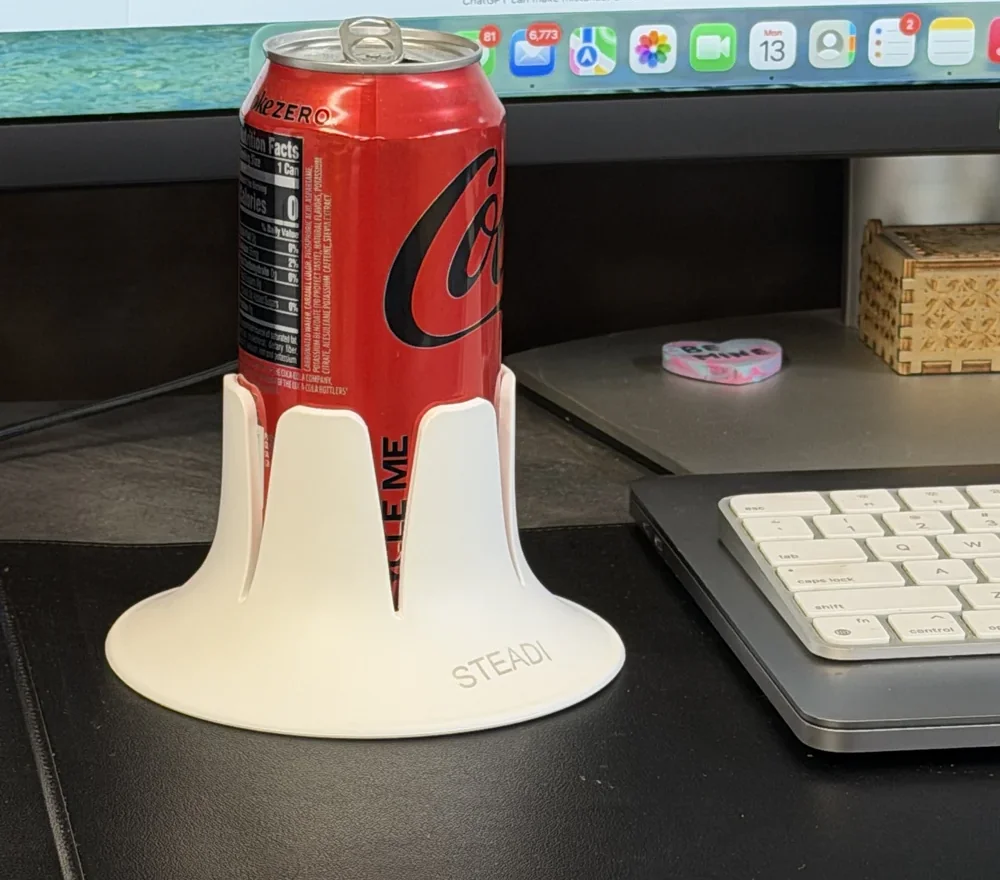
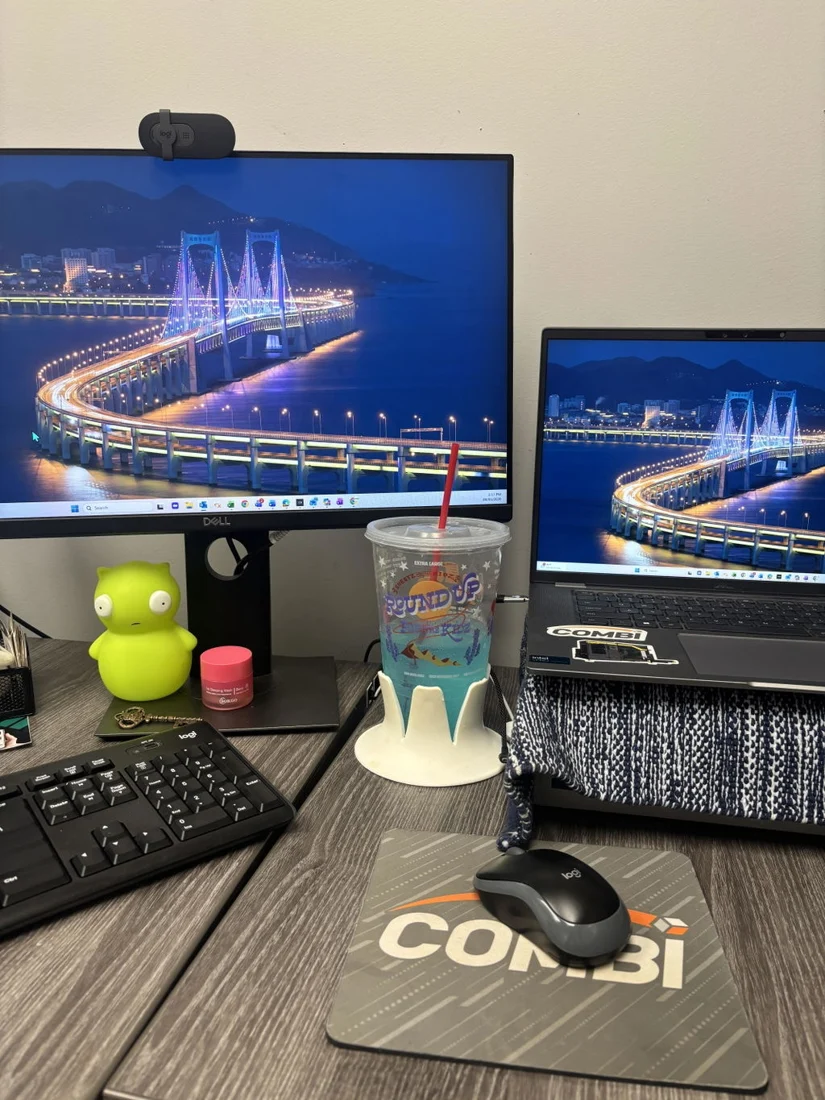
Left to right: the flexible base empty, then holding a cup, a can, and a large tumbler.
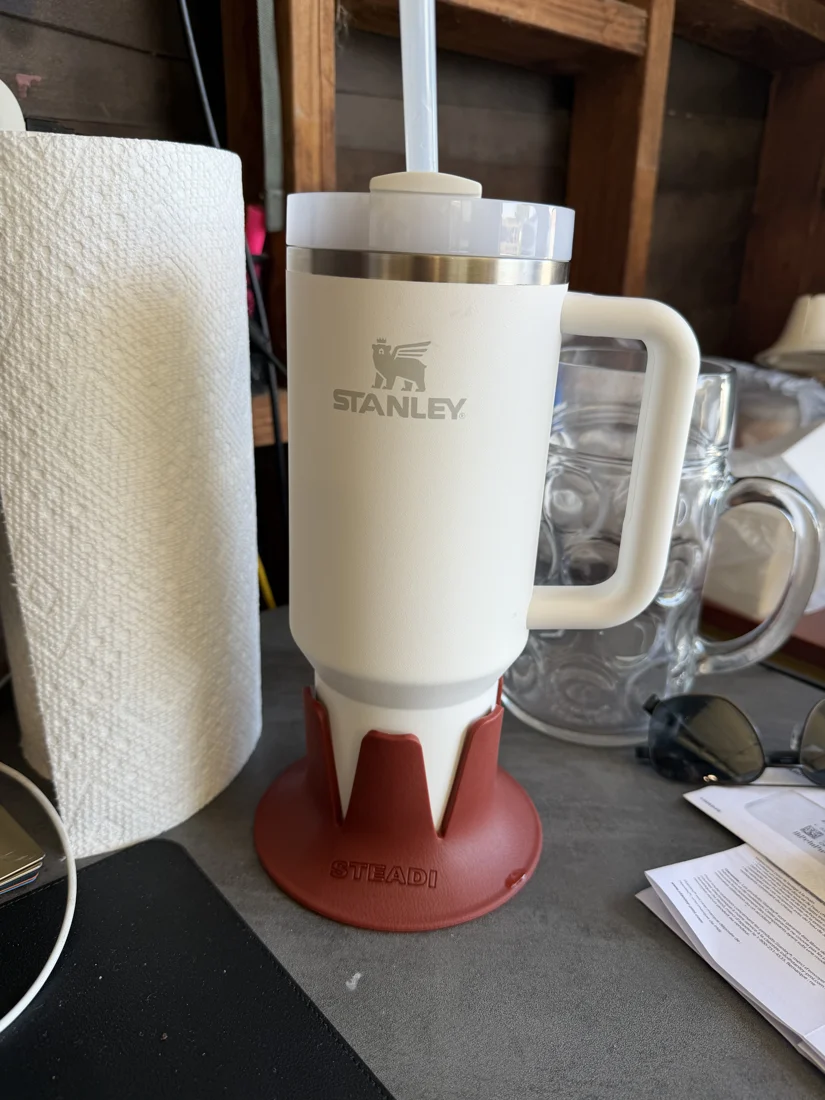
One flexible base. The same grip from first coffee to five o'clock — shown empty, then with a cup, a can, and the 40 oz.

The situation

The drink never got a spot in the setup.

The cables got managed and the monitor got an arm, but the cup still lands wherever there's room — and every spot on a desk trades reach against risk.

Right beside the keyboard.

The natural spot, and directly uphill of the most expensive things on the desk. Smooth laminate gives a bumped cup a runway with nothing to stop it, and the people who've lost a board describe the same physics: it was almost never the drink alone — it was the headphone cord, the phone that rang at the wrong moment, the cat taking the shortcut.

The far corner.

The exile position. Safer in theory — except now every sip is a lean and a reach across the desk, and reaching across is precisely the move reviewers document bouncing sit-stand converters and hooking cables on the way past.

The desk mat.

The cloth mat accepts a sweating can and keeps the ring as a souvenir. It's absorbent on purpose — that's the job — which is why a coffee splash rubbed in a hurry becomes a permanent feature, and a real clean means soaking the entire mat in a bathtub.

The clamp-on holder at the edge.

It hangs the drink off the least dependable part of the desk. Edges run too thick, too thin, or too beveled for the clamp — and the hollow-core tops most budget desks are built on are exactly what clamp mounts are documented to damage.

It's not an emergency — that's exactly why it's never been fixed. Just a quiet bit of risk math, run once per cup, so many workdays deep that it stopped registering as a decision.

You know the moment

A workday, timestamped.

9:06 AM

The first coffee lands right beside the keyboard, because the day is still simple. By the third refill it has migrated to the far corner, and you're doing the lean-and-reach for every sip of a drink you exiled yourself.

2:40 PM

The call runs long, you reach across for the water bottle, and the standing desk does its little bounce — the monitor shivers, the bottle wobbles, and you set it back down like it's wired to something.

11:52 PM

The late session on the good keyboard — the board wearing keycaps that cost more than the board itself did. The seltzer waits a full arm's length away, and you don't love that the arm in question has to travel back over the keys.

The near miss

Everyone at a desk has one: the elbow, the wobble, the lunge, the catch. Nothing actually spilled — and the drink still spent the next week parked on the windowsill, an arm's length from anything it could hurt.

What you get

Three reasons it stays out.

01

Holds steady on hard and flat

A smooth desktop is where the wide footprint and the fin grip earn their keep — it works at least as well on hard, flat surfaces as anywhere. A bumped drink doesn't get a free runway across the laminate: it resists tipping and settles back level.

02

Brings the drink back within reach

The whole reason for the exile was that a bump meant a puddle. When a bump just means the drink settles back, the coffee can live where you actually drink it — beside the keys, no lean, no reach across, no second thoughts.

03

Earns its spot in the setup

Molded in one piece, matte and muted — no clamp hardware, no suction ring, no gadget gloss. It sits as quietly on the desk as the peripherals you chose on purpose, and it lifts away in a second when you want the surface clear.

The fit test

The fit test is already in your top drawer.

your cup's base
lands in here

A square sticky note: 3 inches, exactly.

01
Grab a sticky note.

The classic square is exactly 3 inches on a side. That's a fact about sticky notes — and it happens to be the exact ceiling of what fits.

02
Stand your cup on it.

Right there next to the keyboard. Judge the bottom, not the rim — tumblers taper and rims flare, and the base is the only part that gets gripped.

03
Read the note.

Base lands inside the square? It fits. Hangs past the edges? Too wide. A little puck adrift in the middle — under about 2 inches? Too narrow.

No ruler, no spec sheet, no size-chart tab open in the browser. One note off the stack, one glance, with the cup that already lives at your desk.

Will it fit my cup

Measure the bottom, not the top.

One line decides every verdict: a container base of about 2 to 3 inches across settles in. Here's how the desk lineup shakes out.

The floor matters as much as the ceiling — under about 2 inches, the base sits too loose in the fins. And the handled mug is the honest exception on any desk: its base fits, but the handle lands exactly where a fin needs to grip.

How it works

Three parts, no moving parts.

The base spreads out.

A standing cup balances everything on its own small base, so a nudge gets full leverage. The wide flexible footprint spreads that contact across the desk — a knock has to move the whole spread instead of tipping a narrow column.

The fins grip.

Flexible fins take the cup by its bottom inch and hold it from the sides — grip, not suction, so there's no seal to quit on a dusty desk — and a nudged drink stays put instead of skating across the laminate.

It settles.

An elbow lands, the chair clips a leg, the sit-stand motor hums the whole surface upward — the base takes the motion and brings the drink back level.

Nothing clamps to the edge. No screw-down clamp hunting for a square edge of the right thickness, no pressure on a hollow-core top, no install at all. It sits anywhere on the surface — desk, mat, or windowsill — and picks up in a second when the setup changes.

Surface report

A desk is harder, smoother, and less still than it looks.

It isn't carelessness. A desk stacks the slick, the absorbent, and the quietly-in-motion on one surface — and parks the electronics downhill of every landing.

The laminate desktop

Most budget tops are a painted skin over a particleboard frame and a honeycomb core — largely hollow air. Dead flat and smooth, so nothing arrests a sliding can; and once liquid finds a seam it wicks in, the board swells, and the swelling rarely comes back down.

The keyboard strike zone

It takes surprisingly little — forum threads record boards lost to a few ounces, not a full cup. Anything sugared dries sticky under the switches, and plenty of posters did the whole rescue ritual — flip, drain, wipe, days of drying — and the board still didn't come back.

The laptop deck

On a laptop, the keyboard is the lid of the computer: whatever lands on the keys drains straight toward the logic board and the battery. Repair shops price that visit by how far the liquid traveled, and none of the tiers are small.

The cloth desk mat

Absorbent by design. It drinks the sweat off a cold can, and the care guides are unanimous — blot, don't rub, because rubbing sets a coffee stain for good — and it can't ride the washing machine either. It protects the desk by taking the hit itself.

The standing desk

The entire work surface rides on legs and a mechanism. Reviewers document converters bouncing under ordinary typing and under the lean-for-the-mouse, and users report monitors visibly shaking — the full cup of coffee stands on that same platform.

Versus what you do now

Every fix so far had a catch.

The clamp-on cup holder

It attaches to the one part of the desk that varies most. Buyers keep reporting edges too thick, too thin, or too beveled for the clamp; spring tension that loosens as paint chips off; mug handles that won't seat in the slot; and hollow-core tops damaged by the very mount meant to protect them.

The suction-bottom cup

The grip depends entirely on what's under it. Reviewers keep describing the same arc — sticks impressively for a day or two, then stops; won't grab textured laminate or varnished wood at all; a little dust on the base ends the seal. And it guards only its own cup — the seltzer standing next to it is on its own.

The desk mat as spill insurance

It doesn't stop the spill; it absorbs it. The care rules tell the story — blot, don't rub, no machine wash — and a mat that takes a real coffee hit ends up soaking in a bathtub. It saves the desk by becoming the casualty.

Exiling the drink to the far corner

Distance just changes the failure mode. The far drink is the one you lean and reach across the desk for — the exact motion reviewers measured bouncing desk converters — while cords, blankets, and cats supply the snags that pulled bottles over in the first place.

Before you buy

Questions people actually ask.

Does it actually work on a hard, flat desk?

Yes — at least as well as anywhere. A desk calls for footprint and grip, and that's the design: the wide base gives a bump nothing to tip, the fins keep the drink from sliding across the laminate, and pushed off level it settles back.

My keyboard cost more than my desk. How much protection is this, honestly?

Honest answer: it resists tipping — it holds the drink steady through bumps, snags, and desk wobble, and settles it back level. It isn't a sealed cup, so on the days the good board is out, pair it with a lidded tumbler and you've got both layers.

Will my tumbler fit?

Check the bottom, not the top. A base of about 2 to 3 inches across settles in — the 40 oz Stanley does. Handled mugs don't: the handle lands where a fin needs to grip.

Does anything clamp or stick to the desk?

No. No clamp hunting for the right edge thickness, no adhesive, no pressure on a hollow-core top. It sits on the surface, anywhere you want it, and lifts away in a second.

My standing desk bounces when I type. Deal-breaker?

No — a surface that's never quite still is the use case here, not the exception. The base rides the bounce and settles the drink back level as the platform moves. Honest limits: it resists tipping, it doesn't suspend physics, and a full-force elbow is its own event — but the ordinary shiver of a converter under typing is exactly what it's shaped for.

Will it scratch the desk or bother the mat?

It's one piece of matte flexible material — no hard edges, no clamp jaws, no adhesive residue. It sits as gently on a painted laminate skin as it does on the cloth mat.

What about condensation rings?

The drink stands in the base, so the sweat off a cold can lands on the base instead of on the mat or the wood — and the base rinses clean in the sink.

How do I clean it?

Rinse it, or run it through the dishwasher. It's a single piece of flexible material with nothing to disassemble — unlike the keyboard.

Who makes it, and where do I buy one?

It's called the Steadi, molded in small runs in Orange, California by Steadi Labs — veteran-founded and patent pending. Every order ships free from steadilabs.com, with 30 days to change your mind.

Who makes it

Made start to finish in Orange, California.

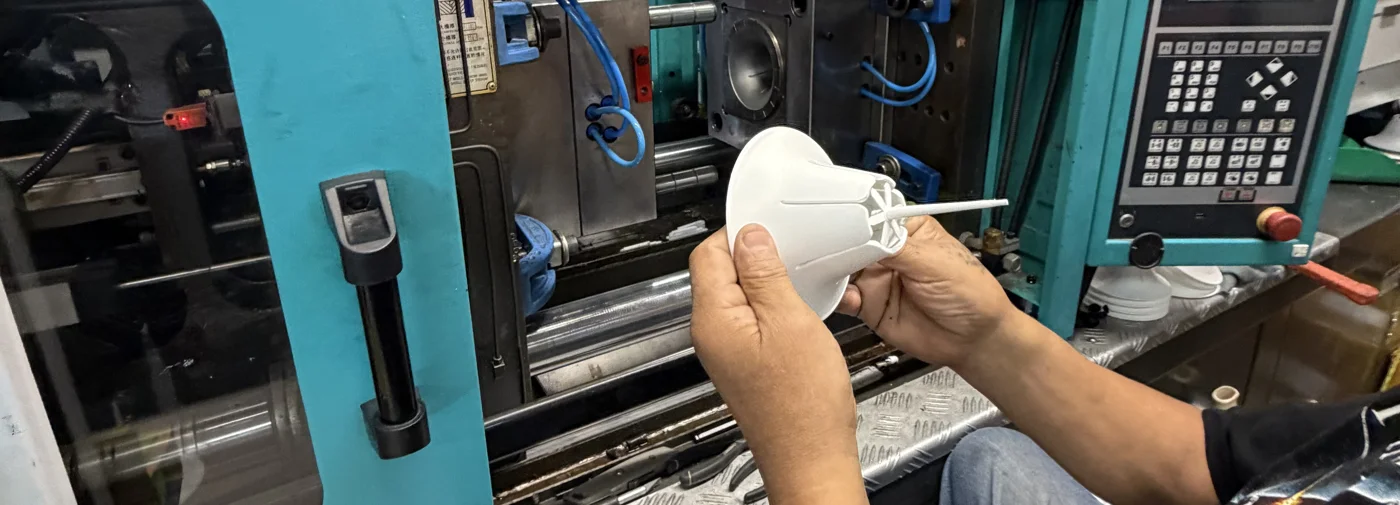
The maker is Steadi Labs, a small veteran-founded company in Orange, California. It's injection molded — the mold, the material, and the color runs all sit within about three and a half miles of the shop, and every batch is molded there in small runs. The people who make it are the same people who answer hello@steadilabs.com.

Thirty days, wherever you use it.

Use it for a month. If it doesn't do what this page says, email hello@steadilabs.com and it gets made right — no forms, no fight.

Veteran-founded · Patent pending · Made in Orange, California

Let the coffee sit next to the keys.

The cup stands beside the keyboard through the bumps and the bounce, the far corner goes back to being empty desk — and the lean-and-reach retires.

Get yours at steadilabs.com →

Checkout is on steadilabs.com — Steadi Labs is the company that makes it.